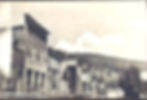
The Depression deepened and the Callahans moved again. In Gibbonsville, Idaho, they could reunite with Ross, Lois, and their first grandchild. In uncertain times, the family was better off together, even if wages were better in Butte. The town lay just over the divide from the Salmon River country, close enough that the places Ed had known since boyhood never felt far away. Ed had started school in Gibbonsville in 1893, and returned as soon as he was old enough to be hired to drive the stage to Noble. Now he was there with his family.
Bill Taylor, his step-dad and sister Alta lived in Shoup close enough to visit. The rivers still teemed with trout and the hills with game. Nora had plenty of room for a garden and time with her grandchild. Eleanor, Earl and Lorne were enrolled in school and when they weren't at school, it was easier to keep track of the boys than it had been in the rough streets of Butte.
Most Saturday evenings the old Maccabee Hall would fill. People came in from up the creeks, from ranches and cabins tucked into the hills. Wagons and cars lined the road. Inside, the hall was plain but serviceable with a wooden floor, worn smooth in places and an over-sized wood stove. Someone tuned a fiddle, another took up a guitar and before long, the music found its footing.
The dances were called and stepped through in turn. Two-steps, waltzes and reels set the floor to moving. Men who had spent the week underground stood a little straighter. Women, who had stretched meals and managed households on next to nothing, came in with clean dresses and their men in pressed shirts and for a few hours the weight of life eased. There was laughter and talk that carried from one corner of the room to another. News was exchanged, small grievances forgotten and young people watched one another with careful attention. As the night wore on, children fell asleep on coats or in chairs along the wall. By the time the music slowed, and the lamps burned low, people stepped out into the cold night, revived in spirit.
In a place like Gibbonsville, in the hard time they were living, that respite from all care mattered.
A Gibbonsville Christmas
by Lorne Callahan
Mom made a trip into Salmon and we knew she bought Christmas gifts. One day we were home alone while mom took a promised cake to the church. We began snooping, eventually finding Eleanor's little doll. Finally, in another closet, we spied our gift high on a closet shelf. It was exactly what they had wanted! Each day until Christmas if Mom was out, we would sneak down our farm set and play with it. Christmas morning we feigned surprise and thereafter enjoyed the toy, but never as much as before the gift had been presented.
Earl would remember Christmas in Gib'town, too.
Christmas was a wondrous time, even if the family was strapped for cash. Along with a few store-bought gifts, we unwrapped handmade wonders. Dad built Eleanor a full set of doll furniture, carefully sized and finished. Mom labored for weeks over a complete wardrobe for Eleanor’s new baby doll.
Dad had brought home two old sleigh runners — rusted, bent, and discarded things — and set to work on them without us knowing. On Christmas morning we saw what had become of the old iron. The rust was gone, the runners straightened and true, fitted with weathered boards that Dad had planed, sanded, and painted. We now had the fastest, finest sleigh in town.
With the Depression in full swing, money was scarcer than ever. Ed and a few other miners were working for a man from New York and were paid in promises more often than cash. Winter of 1932 Ed got word that the man was about to skip town before paying the miners their back wages. Ed went after him and caught him before he could leave, determined to get some satisfaction for all the long hours he had worked in the man’s mine.
The man turned over what cash he had in his wallet, telling Ed to divide it among the men. He had a lease on the Monolith mine above Shoup and told Ed to start working it, and he would return with some capital.
Ed's neice, Alta Lee Barton was married to Max Dudley and the men made a plan. Pete Barton, Ed's brother-in-law and Fred Bevan held the Twin Dikes mine, and agreed to lease it to Ed and Max. Both mines were above Shoup, and between the two mines, ought to produce enough gold and silver for them to get by.