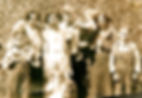
Shoup was for the Callahan children and their Barton cousins, a whole world. Thier parents were born there, and while Ed left, he always returned. Alta never left except to live with her daughter in Butte the final year of her life.
What follows are some of their children’s memories of Shoup.
Edna Barton
During the Depression my mother, Alta Callahan Barton, lived in Shoup with five of her youngest children. She owned her home, the garage, and a boarding house.
Bill Taylor — Annie’s husband — rented a house in Shoup and worked as an amalgamator for a mining outfit. He drove up to the Callahan place for dinner.
Years earlier Bill had operated the Monolith the same way my cousin Ed Callahan was working it now.
My father, Peter Barton, and his partner Dick Williams dug the ore from the mine, loaded it into tram buckets, and sent it to the stamp mill on the creek.
Reminices of Peter Barton, Jr.
My grandmother Annie died in 1927. She had been such a character. Before she died she would ride in from Ulysses, and after greeting us she and my mother would shoo us out of the house so they could gossip about the neighbors.
The large pack trains came twice a year. In summer they brought melons. In the fall they hauled apples. We didn’t have a road downriver until I was almost grown, and the first one was just a narrow wagon road that washed out nearly every spring.
My brother Myron and I earned enough money to put up a few mules. My mother, Alta Callahan Barton, bought the garage across the street from our house, perched right against the cliff above the Salmon River. We ran freight and were paid well enough.

Eleanor Callahan Remembers
When I think of Shoup, I can’t help but think about my brothers. Those two really loved each other. Oh, they fought like brothers will, but they were the kind who would curl up and sleep together afterward.
Lois had her little ones. I was a young teenage girl living on the mountainside of one of the smallest towns in Idaho.
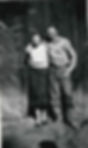
I wasn’t always content, but I was reliable. People noticed that, and family friends encouraged me to get an education and make something of my life. Mr. Haynes, a friend of our grandfather James, lent me books to read. He told me how smart James Callahan had been and said I was just as smart.
One day I was hurrying home because musicians were coming that evening to play for a dance at the boarding house. During the spring breakup Dad forbade us children to walk on the west side of the creek. The steep canyon wall there was shielded from the sun all winter and the snow piled deep. Even in summer patches remained. In spring those snowbanks could break loose and slide down the mountain. That day I was in a hurry. The safer path took longer, so I crossed the bridge and started along the forbidden side.
After a while I felt terribly guilty about being disobedient, so I turned back to the bridge and crossed again to the safe side of the creek. Only a few moments later I heard a rumble that turned into a deafening roar. Snow came crashing down the mountainside, tearing up trees as it gathered speed. I was only twelve or thirteen, but that avalanche made a lasting impression. And so did the wisdom of minding Daddy.
Memories of Earl Callahan
Eleanor was bigger than Lorne and me and was a real tomboy. She was as good or better than most of the boys at every game we played — Pump-Pump-Pull Away, Run-Sheep-Run, or baseball played with a milk can and sticks.
I saw her get mad at boys her age and beat them up with her fists.
Our teacher wasn’t the stereotype of a backwoods schoolmarm. She was young and energetic and appreciated the children’s hunger for contact with life outside the confines of Shoup.
We couldn’t have lived in a better place during the Depression. We never went hungry or cold. We didn’t wear shoes during summer but before school started, Mom and Dad took us to Salmon for a new pair of shoes.
My father was a very responsible man. He always brought home a paycheck and took care of his family the best he could in very hard times.
He actually did heroic things to keep the family going.
He was generous to a fault.
One winter he brought home a family of fourteen who had arrived in Shoup with nowhere to go. Their father was working in a CCC camp and didn’t even know they were coming. Dad took them in. They stayed with us for a month and a half and nobody went hungry. That was the kind of man he was. When he hunted he always brought home a deer for old Cox, who claimed he had been wounded in the war and couldn’t hunt.
Everyone liked my dad. He boarded young miners in the house and treated them like family. Many of those boys worshipped Ed Callahan.
He wasn’t demonstrative, but he showed his love in different ways—like making us sleds and skis when there was no money for presents.
I couldn’t have chosen better parents myself. Mom raised us on Bible stories. We didn’t have radio down in that canyon, so she read to us.
Dad didn’t talk much about religion, but he showed us the mountains and said the world had to be created because it was too beautiful not to be.
When things were hard later in life — especially in the war — I remembered that faith and it carried me through.
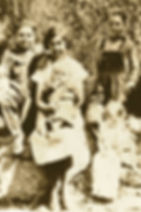
Reminces of Lorne Callahan
It was here that I finished three grades of school.
Eleanor, Earl, and I walked to school swinging our lunch buckets—except on the days when we had hot lunch at Aunt Alta’s. Eleanor supervised the journey, warning us not to play too much or we would be late.
Our schoolhouse sat beside Boulder Creek just before the creek tumbled down a waterfall into the Salmon River.
There were about a dozen children in the school. Earl was two grades ahead of me and Eleanor was in the upper grades. The teacher separated us by grade and moved around the room assigning lessons.
She called the small classes to the blackboard one at a time or sat beside us quietly explaining our lessons.
We all liked her very much.
At the beginning and end of the school year the pack trains came through Shoup from the ranches downriver. School was sometimes let out when the trains arrived.
They crossed the Swinging Horse bridge and we would line up by the post office to watch them come swaying over it. You could hear the clippity-clop of hooves and sometimes a stumble when a mule lost its footing.
The skinners always looked dirty and happy. They watered the animals at the trough in front of Hacksaw Tom’s place and unsaddled them for a rest. Hacksaw would strip to the waist, pull on his leather apron, and fire up his forge. Then he would trim hooves and shoe the animals before they continued on to Salmon City.
Sometimes the skinners opened a pack or two and handed out treats before heading to Aunt Alta’s for a meal.
The pack trains were not the only seasonal visitors. Sweep boats also came through the canyon. They stopped at Shoup to eat at Alta’s before continuing down the treacherous Salmon River. Usually one of the local men guided them through the worst stretch between Shoup and Panther Creek. We children piled into the teacher’s car and drove down to Pine Creek Rapids to watch them.
The CCC boys were building a bridge there and we stood on it watching the boats try to shoot the rapids. Many boats were torn apart on the rocks. Sometimes they flipped, sending the crew scrambling for shore. Once we saw a boat caught in a whirlpool. It spun until the bow rose from the water and the stern slipped under. The boat disappeared and one of the men with it. A search party found his body a few days later under brush beside the river.
Most trips were less dramatic. When the boats disappeared around the bend we piled back into the teacher’s car and returned to school.
That good old warm kitchen. Tippy the dog would stretch and settle behind the stove while old Black Tom the cat curled between his paws. Dad and Mom talked about grown-up things while Dad and his partner did all their “mining in the kitchen,” as Mom liked to say.
Dad would take Earl and me on his knees and ask if we thought we would ever amount to much.
We would show him our muscles and he would grin and say, “Wow—just like hummingbird wings!”
Dad used to say, “That ore is there and it’s high-grade. If I just had the money to develop it properly I’d be sitting on a rich hill instead of making wages.”
To us it was all a great adventure. School. Snowball fights. Exploring the hills. Coming home to the big kitchen and Mom’s bread, cakes, cookies, and candy. We had chokecherry syrup or gooseberry sauce on hot cakes in the mornings. Pasties for supper drowned in freshly churned butter.
Dad took us fishing just above and below the bridges. Within an hour we could catch all the trout we could eat.