Finding Annie Callahan In Shoup

Updated: Mar 30
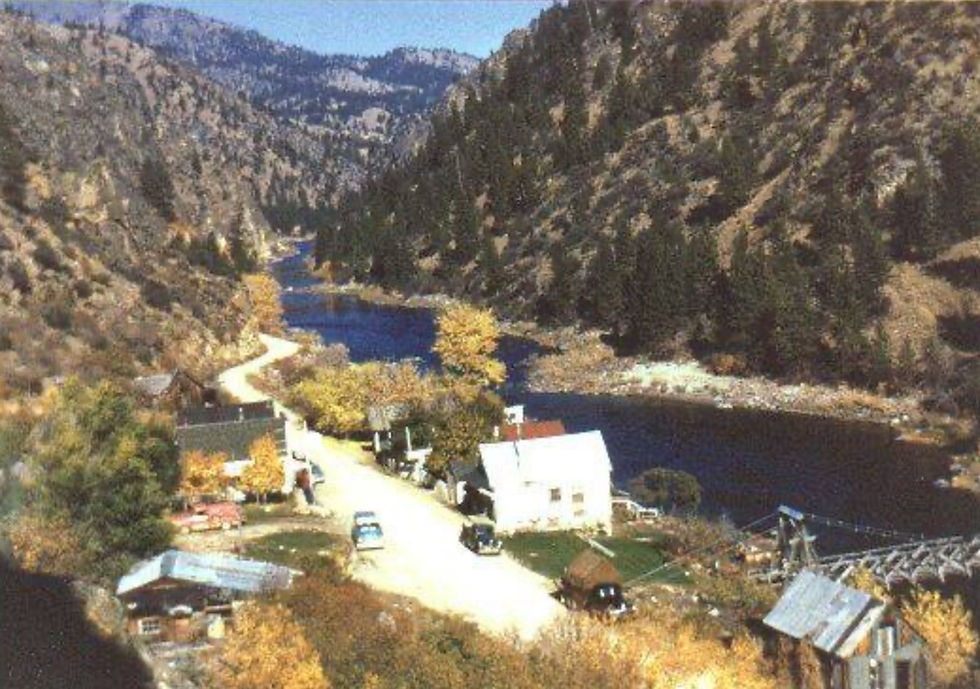
Every story on this site began somewhere. For me, it began with a trip I took in the summer of 1972—long before I knew what I was really looking for.
I packed up my Datsun truck. I could be gone as long as my money held out, so I decided not to eat much and drove straight through Nevada, headed for Idaho. Gas was about thirty-five cents a gallon, and I had lots of rice, canned vegetables and a fishing pole.
My dad was born and raised in Idaho, and I had to see it for myself. Before I left, he warned me: “Don’t go down to Shoup. That river will drown you. I’ve seen men drown in it.” There were rattlesnakes too, he said. But I had grown up on his stories about Shoup—he called it home—and the warning only sharpened my curiosity.
I stopped to see Shoshone Falls, camping along the way. There were glorious days near Sunbeam—the river quick and cold, mornings scented with pine and woodsmoke—and I was hooked on Central Idaho. Then it was a straight shot to Shoup.
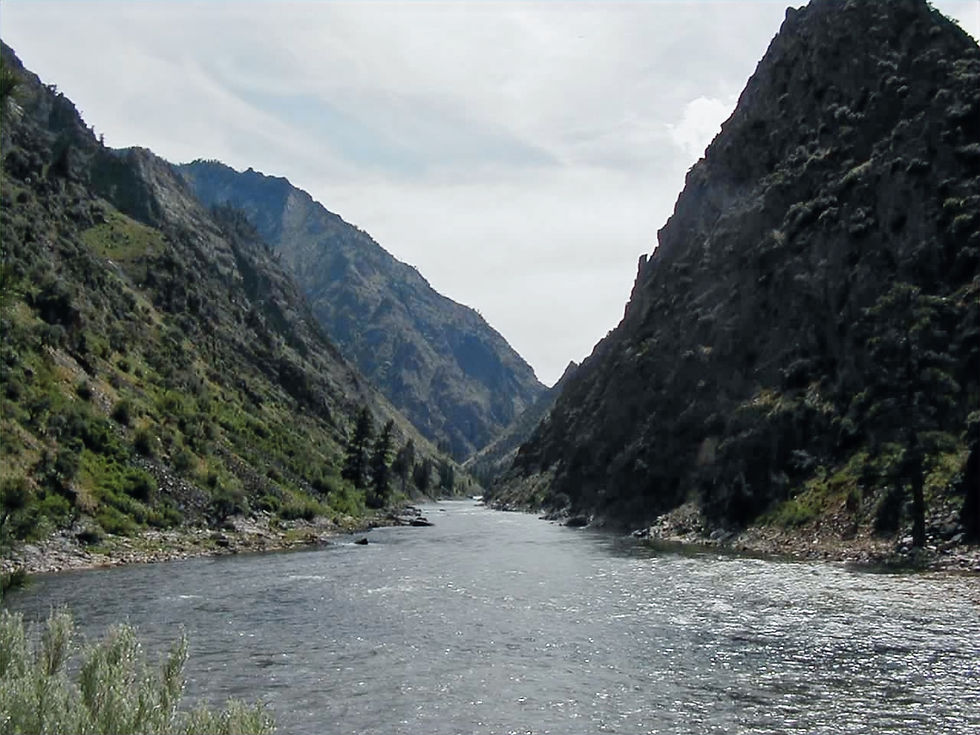
Panther Creek seemed the best place to set up camp, where the rush of water sang through the night. Close by was a little store and café run by two friendly women. There was a green lawn they kept wet to discourage rattlesnakes from sunning. From there, the wandering began—up and down the river, sitting on the massive boulders at the Pine Creek rapids, climbing a narrow trail below Shoup, walking the road above the boarded-up town.
The store was open, but the old log schoolhouse was locked. I wondered where Dad’s swimming hole on Boulder Creek had been, and where the old boarding house stood where they lived during the Great Depression.
I kept thinking, This feels like home. But this is the first time I’ve been here. I think.
Maybe we drove downriver when I was six, but it’s all tangled in memory: my cousins’ ranch near Hailey, meeting old ladies who were my father’s aunts, two weeks on an ocean liner before that, and a long car ride to the East coast after our visit in Idaho. Maybe I’d been to Shoup before. Maybe not. Either way—it felt like home.
In the Shoup store, a man appeared—the storekeeper, I figured—and I asked if there were any old-timers who might remember my grandparents. He said two brothers lived downriver, “but on the other side,” and that I should look them up.
A few days later, I found the brothers on their porch, watching the river. We started hollering across the water.
“My grandparents were Ed and Nora Callahan. Did you know them?” I shouted.
One of the men called back, “What’s your name?”
When I hollered it, that stopped them.
One jumped up, waving his arms like he might leap the river. He pointed to the cable car. “Get in, and come over!” he yelled.
I was too spooked—one of Dad’s stories included a drowning when a cable failed—so we kept shouting.
He kept insisting and shouting “No, your grandmother lived on Pine Creek!”
“I didn’t have a grandmother on Pine Creek.”
“Yes you did,” they both said, and later told me how to find her old ranch.
Next stop: Pine Creek Ranch
I drove up into the valley. Back then it was a Girl Scout camp behind a gated road, but to me it felt like a long-lost address suddenly handed back.
When I got back to California, I sat my dad and aunts down.
“Tell me about the grandmother on Pine Creek.”
“Oh, Annie?” they said. “That was our grandmother, and she was a nut. She was a schoolteacher and writer."
Dad added, “I don’t think she liked my father much—she reminded him of his dad.”
“Did he tell you that?”
They all looked at each other, and the answer was a shrug.
That was all they would give me. They wanted to hear about my trip— I wanted to hear about Annie.
The real search wouldn’t begin until 1988—sixteen years later—when a box of my aunt’s keepsakes sent me to the library to order microfilm of the Idaho Recorder. That was when Annie stepped out of the shadows.
Since that first trip in ’72, I’ve gone back again and again. A few summers ago, I camped there for a month. Technically, you’re only supposed to stay two weeks, but the days slipped by and nobody seemed in a hurry to send me packing. Word got around—rumors still fly downriver: You’re the woman camped down here all alone.
I imagine Annie smiles at that—loves that I’m there alone.
And I smile back, because I know now that the reason downriver felt like home that summer wasn’t just the sweep of the mountains or the rush of the river.
It was her.
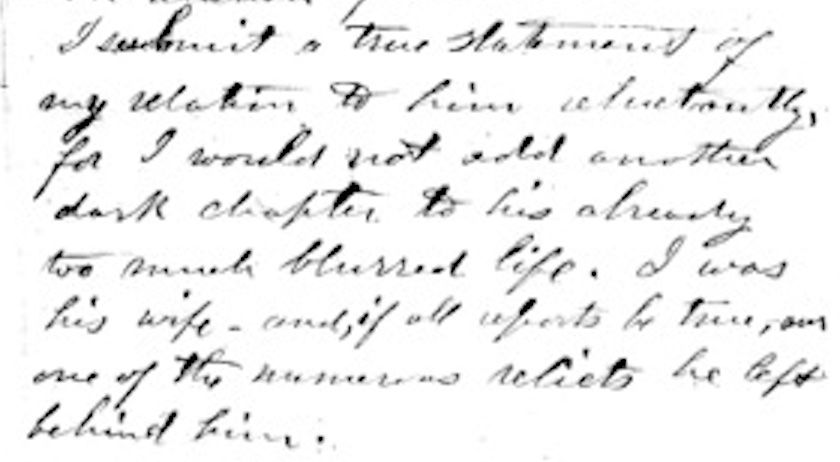
She wasn’t a perfect person—not by a long shot. She marched to a different beat, a woman’s-rights advocate before most folks knew what to call such a thing. She was tough, sometimes to the point of insensitivity. A woman living in the backwoods, yet sophisticated—and as her early writing reveals, she wanted everyone to know it.
After her death, her sister Edna wrote to Annie’s granddaughter, recalling oddities and disappointments, and remarking that Annie’s mind had been “quite unbalanced at times.” The comment stands alone among the family papers.
Perhaps she was. Or perhaps she was just crazy as a fox.
No one I interviewed who knew her intimately ever spoke of dementia or an unbalanced mind when I asked them directly.
Her grandson Peter Barton remembered her fondly, saying she would gallop her horse across the pack bridge and right into the saloon on Main Street, slide off, and leave the horse to back up and wait for her to come out. She subscribed to newspapers and periodicals, and Peter swore she was as smart as anyone he ever knew—half wild, the other half sophisticated and never demented.
One of Alta’s daughters said her mother and grandmother could fight like cats and dogs, yet were inseparable. When her son Ed got the news she had died, he lay on his bed and cried all day.
I think I would have too.
That trip in 1972 was the beginning.
The rest took decades.
Comments